Robotic assistance significantly improves continence rates in radical prostatectomy: Study - Medical Dialogues
Get link
Facebook
X
Pinterest
Email
Other Apps
-
Robotic assistance significantly improves continence rates in radical prostatectomy: Study
Top
We use cookies for analytics, advertising and to improve our site. You agree to our use of cookies by continuing to use our site. To know more, see our Cookie Policy and Cookie Settings.Ok
Alan Bryce, MD PARP inhibition with olaparib (Lynparza) improved radiographic progression-free survival (rPFS) in heavily pretreated patients with metastatic castration-resistant prostate cancer (mCRPC) who had alterations in homologous recombination repair (HRR) genes, according to findings from the phase III PROfound trial presented at the 2019 ESMO Congress. This was the first positive randomized phase III trial reported evaluating a PARP inhibitor in men with mCRPC. The PROfound trial enrolled patients to 2 cohorts. In cohort A, 245 patients with BRCA1/2 or ATM alterations, markers of HRR, were randomized 2:1 to receive either olaparib (n = 162) or physician’s choice of abiraterone acetate (Zytiga) with prednisone or enzalutamide (Xtandi) (n = 83). In cohort B, 142 patients with alterations in the BARD1, BRIP1, CDK12, CHEK1/2, FANCL, PALB2, PPP2R2A, RAD51B/C/D , or RAD54L , all of which are associated with HRR indirectly, were also randomized 2:...
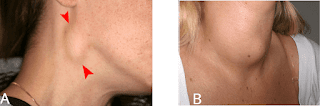
cancer lump on neck :: Article Creator Doctor Watching TV Show Spotted Cancer On Show's Guest That She Didn't Know About Say what you will about social media and daytime TV, but sometimes, they can help work wonders. In fact, the power of Facebook and the popularity of HGTV's Beachfront Bargain Hunt played a big part in helping Nicole McGuiness get ahead of her serious cancer diagnosis - but it was an eagle-eyed doctor who really saved her bacon. The then-32-year-old appeared on the property series alongside her father while in search of a holiday home in North Carolina to celebrate her recent recovery from brain cancer in May 2018. She explained that she had set her sights on 'something near the water', specifically a beachfront property in Morehead City, to start afresh in this new phase of her life. Dr. Erich Voigt was one of the viewers who tuned into the Beachfront Bargain Hunt episode, which Nicole featured in, an...
Abstract In patients with prostate cancer, prostate MRI can be used to detect and diagnose disease, identify dominant intraprostatic lesions that may be treated with a higher radiation dose, help segment radiation treatment targets, and evaluate fiducial marker and hydrogel spacer placements for radiation treatment planning and delivery. Prostate MRI is increasingly being used to make diagnoses and guide management for patients receiving definitive radiation treatment for prostate cancer. Radiologists should be familiar with the potential uses of prostate MRI in radiation therapy planning and delivery. Radiation therapy is an established option for the definitive treatment of localized prostate cancer. Stereotactic body radiation therapy (SBRT) is an external-beam radiation therapy method used to deliver a high dose of radiation to an extracranial target in the body, often in five or fewer fractions. SBRT is increasingly being used for prostate cancer treatment and has been recognized ...



Comments
Post a Comment