Can Tattoos Make Melanoma Harder to Detect? - Health Central
A tattoo won't increase your risk of skin cancer, but it could make it more difficult to detect.
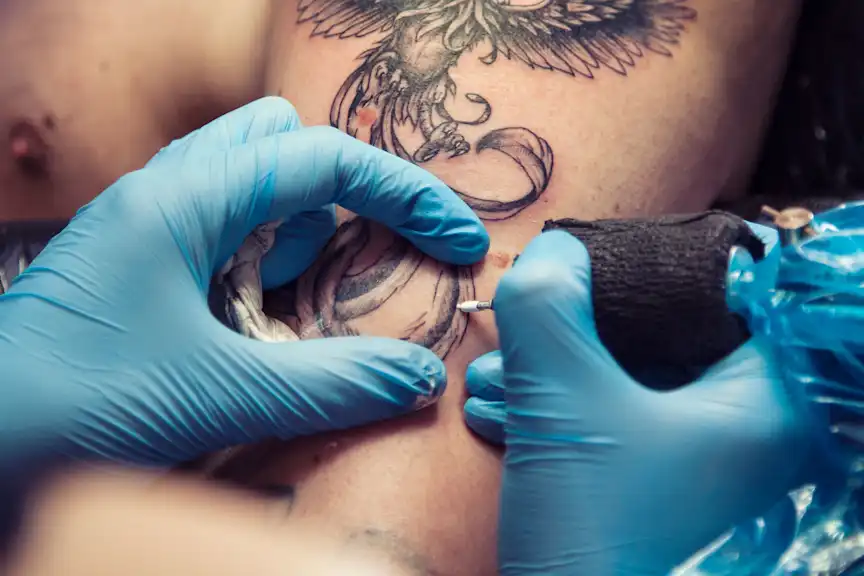
If you're considering a tattoo, you're in good company: An estimated 40% or more of Americans ages 18 to 34 and 36% of those ages 35 to 54 have at least one. While tattoos are generally considered safe, there are potential risks to having ink injected under your skin. One you may not have thought about? The role tattoos might play in skin cancer such as melanoma. So, do they raise your risk of cancer? The answer is somewhat complicated: Here's what top dermatologists have to say about the skin cancer and tattoo connection.
Is There a Link Between Tattoos and Melanoma?
The good news: There is no direct evidence from medical studies that tattoos cause melanoma or any other skin cancers. One review that looked at 40 years of research from around the world found only 50 total cases of skin cancer occurring with tattoos. The authors concluded these cases were coincidental.
Still, not all experts are convinced. The connection between tattoos and skin cancer hasn't been well studied, says Elizabeth Quigley, M.D., a dermatologist at Memorial Sloan Kettering Cancer Center in Basking Ridge, NJ. "No one has taken tattoo inks and done the studies to check carcinogenicity [whether they cause cancer] that pharmaceutical companies do for other products," she says.
And while some common ingredients in ink, like titanium dioxide and zinc, have been carefully tested because they're also in sunscreens, others, such as cadmium, lead, and mercury, have murkier safety profiles and could pose health risks.
The injury to the skin caused by tattooing can also pose a potential health risk. Any time skin is injured, the immune system produces inflammation as part of the healing process. (That's why a new tattoo turns red and swells up.) Inflammation when it's chronic, has been linked in a few cases to the growth of squamous cell cancer, the second most common type of skin cancer after melanoma.
Can Tattoos Make It Harder to Spot Skin Cancer?
The real worry with a tattoo is not that it might cause melanoma, but that it could hide one. Many melanomas are black, brown, or tan—colors that ink can easily camouflage. (Here are some photos, for reference.) For that reason, "People who have a lot of sun damage want to be careful about getting tattoos and should consult with a dermatologist about the location, and also their risk," says Anisha B. Patel, M.D., an associate professor of dermatology at UT MD Anderson Cancer Center in Houston, TX. Years of accumulated sun damage already puts you at higher risk for this skin cancer.
While squamous or basal cell skin cancers may have a noticeable texture change, melanomas are flat. You won't be able to feel them. So it may be hard to spot skin cancer symptoms when you and your dermatologist do a mole check. That means melanoma under a tattoo could grow before you realize it's there. "The longer that melanoma is there, the higher potential it has to invade blood vessels, nerves, and lymph vessels, and spread to other parts of the body," says Dr. Patel.
And if you do develop skin cancer, a tattoo might also complicate your treatment. There have been cases where the immunotherapy drugs used to treat melanoma set off skin reactions in tattoos. Dr. Patel had a patient whose tattoos became so red and inflamed from immunotherapy that the woman had to space out the doses of her cancer drug and take steroid creams to calm them. "Those [types of reactions] are rare, but when they happen, they can impact your cancer therapy," Dr. Patel says.
Should I Avoid Tattooing Certain Skin Areas?
The answer to this question is yes. "What I tell my patients, particularly patients who have a known history of melanoma or are at very high risk, is do not get your tattoos in sun-exposed areas," Dr. Quigley advises. It's safer to ink the inside of your arm than your biceps, or your hip rather than your leg. If you are absolutely set on getting a tattoo on a sun-exposed area like your shoulder or back, choose one that's small or isn't filled in.
Also, avoid tattooing over an existing mole. Ideally, you want to leave all moles visible so that you and your dermatologist can monitor any changes. Finally, it's wise to avoid tattooing sun-damaged areas where you have a lot of freckles—those are places where skin cancer is more likely to grow.
Should anyone avoid tattoos entirely? Dr. Quigley says yes. "Patients who have a history of melanoma should think twice about getting a tattoo, because it does make moles a little harder to find," she notes.
You might also want to skip tattoos if you have familial atypical multiple mole melanoma syndrome, or FAMMM. People with this inherited condition have a lifetime melanoma risk as high as 90%.
Should I Remove a Tattoo If I Have Skin Cancer?
You don't have to remove the tattoo, but you will have to remove the suspicious mole or area of cancer. If that area happens to be under the tattoo, a part of the artwork will come off along with the cancer and leave a scar.
Even if you hate the appearance of a melanoma scar, Dr. Quigley doesn't recommend re-tattooing over it. Your doctor will need to re-check that area periodically to make sure your cancer hasn't come back.
And finally, if you have laser tattoo removal for another reason, never laser off a mole, Dr. Quigley cautions. The laser breaks up the pigment inside your tattoo—but also the pigment inside moles—which can change their appearance and make it harder to see if they've turned cancerous. Have a dermatologist remove the mole instead.
Watching for Skin Cancer When You Have a Tattoo
If you've tattooed over or around existing moles, keep an eye on them. Report any color, size, or texture changes to your dermatologist. Also watch for any new moles that might pop up inside the tattoo.
Even if you're vigilant, though, don't rely solely on your own mole checks. See your dermatologist once a year or more often, especially if you have skin cancer risks like a family or personal history, light skin, and lots of past sun exposure. Your doctor has a magnifying device called a dermatoscope to look deep into your skin and see the differences between tattoo pigment and melanoma pigment that are invisible to the naked eye. If any spot looks suspicious, they'll biopsy it.
And don't forget about sun protection: A tattoo sleeve isn't clothing and it won't shield you from UV rays. Tattoo pigment is in the deeper layers of your skin. The sun damage that causes skin cancer affects the upper layers of skin, Dr. Patel explains. (Added bonus: Wearing sunscreen and sun-protective clothing will also help prevent your tattoo from fading.)
Bottom line? Tattoos don't cause melanoma, but if they're on top of moles or on highly sun-exposed areas, they could hide a melanoma. If you have a family history of skin cancer, think hard about if a tattoo is worth it, and if you decide it is, opt for a safer spot and make sure to see your dermatologist regularly.

Meet Our Writer
Stephanie Watson

Comments
Post a Comment