The 10 deadliest cancers, and why there's no cure
What Color Is Urine With Pancreatic Cancer?
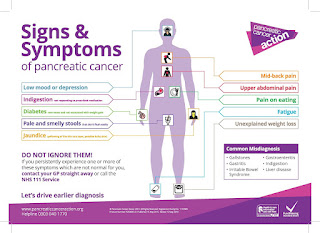
Many people living with pancreatic cancer experience jaundice due to blockages in the common bile duct. Dark-colored urine may be an early sign a person has jaundice.
Just because a person has dark-colored urine or jaundice does not mean they have pancreatic cancer. Proper evaluation by a doctor can help determine the cause of dark-colored urine.
This article discusses how pancreatic cancer may affect the color of an individual's urine and how to manage this and other jaundice symptoms when living with this condition.
Not every person who has pancreatic cancer will have jaundice, and some may not notice any changes in their urine color at all.
If a person with pancreatic cancer also has jaundice, their urine may become darker in color. This may start gradually, with urine becoming only slightly darker than its typical color. Over time, the urine may become a brown color.
Learn more about urine color changes.
Dark urine is a sign of jaundice, a condition caused by excess bilirubin — a yellowish pigment the body produces. This can happen for many reasons, and in most people, pancreatic cancer is not the underlying cause of jaundice.
Around 70% of people with pancreatic adenocarcinoma — the most common type of pancreatic cancer — experience painless jaundice. When a person in the early stages of pancreatic cancer has jaundice, it is likely due to tumors causing a blockage in the common bile duct. This is the part of the body that produces bilirubin.
If pancreatic cancer has spread to the liver, this can also cause jaundice. The liver houses a network of small bile ducts within it, and a tumor in the liver can block any of these ducts.
A blockage in the common bile duct can lead to a buildup of bilirubin, as it can no longer move to the intestines or exit the body. This buildup causes the symptoms of jaundice, including dark-colored urine.
Other signs of jaundice include:
Learn more about jaundice.
Doctors treat jaundice by managing the underlying cause.
When some people have an obstruction of their common bile duct due to pancreatic cancer, a doctor may choose to use a small tube, called a stent, to open the duct. This allows bile to move more freely.
This may only be an option in people with cases where a doctor cannot surgically remove the cancer or when surgery is delayed. A stent can relieve the symptoms of jaundice within a few weeks and make an individual more comfortable.
Doctors can prescribe certain medications to manage itching skin caused by jaundice. Some at-home measures can also help manage it, including:
Doctors often do not know if someone has pancreatic cancer until the disease has already spread to other parts of the body. This is because the condition is difficult to detect in its early stages.
In around 52% of people, the cancer has metastasized or spread to distant parts of the body by the time a doctor diagnoses it, and in 23%, it has spread locally.
Signs that pancreatic cancer has spread to the liver or within the abdomen include:
Signs that pancreatic cancer has spread to the lungs include:
Signs that pancreatic cancer has spread to the bones include:
Below are some common questions about pancreatic cancer.
What color is pee with pancreatic cancer?Jaundice due to pancreatic cancer can cause urine to be darker than usual, possibly becoming a dark brown color.
Can urine detect pancreatic cancer?While dark urine is a possible sign of jaundice, which may sometimes indicate pancreatic cancer, there are many other reasons a person may have dark urine. Research from 2023 indicates that doctors may be able to detect some pancreatic cancers by identifying certain substances in the urine.
What is the number one symptom of pancreatic cancer?Pancreatic cancer symptoms can vary from person to person. However, most individuals experience weight loss, abdominal pain, and jaundice.
Jaundice is a common symptom of pancreatic cancer, often caused by an obstruction in the common bile duct and a buildup of bilirubin in the body.
Dark-colored or brown urine may appear in people with a large buildup of bilirubin, which could indicate they have jaundice. However, there are many other reasons a person may have jaundice or dark urine.
Doctors may be able to treat jaundice caused by pancreatic cancer by surgically removing the cancer that is obstructing the bile duct. In people with cases where this is not possible, a doctor may use a stent to open the duct, allowing the bilirubin to move normally through the body.
Blacks Have The Highest Rates Of Pancreatic Cancer, But We're Missing From Pancreatic Cancer Trials
Pancreatic cancer is among the deadliest types of cancer in the United States, with the American Cancer Society (ACS) estimating about 66,440 new diagnoses and 51,750 deaths in 2024.
The five-year survival rate for pancreatic cancer is currently 12 percent. A five-year survival rate is the percentage of people in a study or treatment group alive five years after initial diagnosis or treatment for a disease, such as cancer.
Black Americans have a higher incidence rate of developing pancreatic cancer than white, Asian, and Hispanic Americans, however, Black Americans are also less likely to participate in clinical trials for pancreatic cancer.
Black Americans have a pancreatic cancer incidence rate of 16.2, followed by 13.8 for hites, 12.1 for Hispanics, and 10.1 for Asian/Pacific Islanders per 100,000 people in the United States.
These statistics suggest underlying racial disparities throughout the continuum of pancreatic cancer care, leading Black Americans to have worse health outcomes.
A new study published in the Cureus Journal of Medical Science examined the racial and ethnic composition of patients with pancreatic conditions at the statewide Indiana University (IU) Health system. The study's goal was to get deeper insights into possible racial disparities in the prevention and early detection of pancreatic cancer.
Researchers pulled data from the IU Health System to determine the racial distribution of pancreatic patients across each of the 17 medical facilities.
The study's data included the following patients receiving care at IU hospitals:
The study's results revealed that Black Americans receiving pancreatic surgery or participating in biobanking
Pancreatic Cancer Is Hard To Detect In Early Stages. A New Blood Test Could Help
Key TakeawaysPancreatic cancer is one of the deadliest cancer types, largely because it's difficult to detect in its early stages. Researchers have now developed an experimental blood test that detected 97% of stage 1 and 2 pancreatic cancers in an early clinical trial.
Tumors in the pancreas tend to go undetected until they have already spread to other parts of the body. By some estimates, 80% or more of pancreatic cancers cannot be removed through surgery by the time they are identified.
Despite accounting for just 3% of new cancer diagnoses, pancreatic cancer is the third leading cause of cancer-related deaths in the United States. By 2030, pancreatic cancer is projected to be the second most common cause of cancer death.
"If we can capture all patients in a state where their cancer can still be surgically removed, most of those patients are probably going to live most of their lives without having to worry about it," Ajay Goel, PhD, senior author of the study and chair of the department of molecular diagnostics and experimental therapeutics at City of Hope, told Verywell.
His team's experimental liquid biopsy works by detecting genetic markers of pancreatic cancer in the blood. That could alert clinicians to the presence of cancer before it can be seen with traditional imaging tools.
The researchers presented data from their first clinical trial at the American Association for Cancer Research meeting this month. The trial included nearly 1,000 participants from the U.S., Japan, South Korea, and China, about 80% of whom had stage 1 or 2 pancreatic cancer. The U.S. Cohort included 139 participants with pancreatic cancer and 193 healthy donors.
The test was almost totally accurate in identifying which study participants had early-stage pancreatic cancers. The test will be studied in larger clinical trials, and researchers will investigate how well the test identifies pancreatic cancer in people with no known disease.
Why It's Important to Catch Pancreatic Cancer Early The pancreas is tucked deep within the abdomen, which can make it difficult to sample with a standard needle biopsy or to visualize with standard MRI and CT scans. The early warning signs, such as abdominal pain and sudden weight loss, can indicate many different conditions. Pancreatic cancer also tends to metastasize early on, when the tumor is still small, said Brian Wolpin, MD, MPH, medical oncologist and clinical investigator in the Center for Gastrointestinal Oncology at Dana Farber Cancer Institute, who was not involved with the research. "[Pancreatic cancer] has no population screening, which means that you're not really detecting things at the asymptomatic stage very often," Wolpin said. "For a lot of the people who I see in clinic, I already know we won't be able to cure the cancer because it's already presented so late," he added. "Early detection and prevention are really important for this disease, even more so than others." The biology of pancreatic cancer is complex, and many of the current treatments don't work very well, Goel said. Even with advancements in chemotherapy in the last several decades, the prognosis for patients hasn't much improved, he added. Catching pancreatic cancer just a few months earlier can significantly increase the possibility of treating the disease. The five-year survival rate is about 3% for people diagnosed with pancreatic cancer that has metastasized to other organs. The rate is 44% when clinicians catch the cancer before it spreads outside of the pancreas. "This cancer is already lethal. And if the numbers are going to continue to double in terms of incidence, then we need to do something about it," Goel said. How the Liquid Biopsy Works When cancer cells die, they are released from the tumor into the bloodstream, where they may break down and shed pieces of DNA, proteins, or other cellular parts. A liquid biopsy works by detecting those cellular fragments. The new pancreatic cancer liquid biopsy identifies small extracellular parts called exosomes, small vesicles that carry genetic information between cells. When they are shed into the blood, they still hold the genetic information from the cell they came from. The City of Hope researchers identified five genetic markers called microRNAs that float freely in the blood and are unique to people with pancreatic cancer. If the biopsy finds signs of that genetic information, it's likely that a patient has some cancerous growth. "Free-floating microRNAs in the blood are very stable and can be easily detected. But the challenge is always: 'How do we know that the microRNA you're looking at came from your target organ, whether it is pancreas or breast or colon?'" Goel said. That's where the exosomes come in, he said. The test also detects exosomes that contain at least one of eight microRNA unique to pancreatic cancer cells. This work "appears promising," said Harry Aslanian, MD, gastroenterologist and pancreatic cancer expert at Yale Cancer Center, who wasn't involved with the study. Combining the markers found in exosomes and in the blood allows the test to get a fuller "fingerprint" of the cancer, he said. The only blood test currently available for pancreatic cancer tests for the protein CA 19-9. It's typically used to monitor how well someone with pancreatic cancer responds to treatments. Many people have detectable CA 19-9 in their blood and high levels of the protein can be indicative of non-cancer conditions, like gallstones and liver cirrhosis. For that reason, CA 19-9 tests are usually paired with imaging and other tools for pancreatic cancer detection. When the team used a liquid biopsy with their new genetic signature, they detected 93% of pancreatic cancers in the U.S. Cohort. When they combined it with a CA 19-9 test, the accuracy increased to 97%. Liquid biopsy technology is relatively new and isn't yet available for most types of cancer besides some options for non-small cell lung cancer. In 2020, a team of researchers from the University of Pennsylvania published a study in Clinical Cancer Research showing that their liquid biopsy was 92% accurate in detecting early pancreatic cancer. A 2022 pilot study from UC San Diego showed that a blood test to detect exosomes and other proteins associated with pancreatic cancer could detect the disease in stage 1 with nearly 96% accuracy. Who This Liquid Biopsy Is For Pancreatic cancer screening is currently reserved for people at high risk of developing the disease. This includes people with certain genetic conditions, chronic pancreatitis, a history of smoking, new-onset diabetes, and a family history of pancreatic cancer. High-risk individuals are recommended to start screening at age 50 or 10 years before the earliest cancer diagnosis in their family. Screening may involve high-resolution imaging techniques such as MRI scans or endoscopic ultrasounds to check for any precancerous or cancerous growth. However, this kind of screening can be expensive to perform frequently, Aslanian said. If the FDA approves a liquid biopsy for pancreatic cancer, the test can tip off clinicians to the presence of the disease, Aslanian said. They might then scan the pancreas to detect the tumor and biopsy the tissue. Goel said it's unlikely that blood tests will be made available to screen the general population as is done for colorectal, breast, and other cancers. "It wouldn't make financial and practical sense to put everybody on the planet through screening for pancreatic cancer because we'd have to screen probably 10,000 to 15,000 people to find one who has disease," Goel said. Goel said the blood test is low cost and easy to use, so people with a family history of pancreatic cancer can, and should, get tested early and often for the disease. What Comes Next Researchers are not only working on developing accurate blood tests but also urine- and stool-based liquid biopsies. Those tests are less developed than the blood-based liquid biopsies are, Wolpin said. Scientists are also using artificial intelligence to try and find signatures of developing pancreatic cancer in MRIs and CT scans that a human radiologist might miss. Developing better imaging tools could also help clinicians notice small tumors hidden deep in the abdomen, Wolpin said. "There are quite a number of groups now who are really focused on this problem. I am hopeful that in the next several years we'll see even more advancements, bring these tests to the clinic, and really start to get a handle on whether they can be effective to find cancer earlier," Wolpin said. Until then, families with a history of pancreatic cancer who want to access liquid biopsies before they become commercially available can consider participating in clinical trials, Goel said. "We want to make the pancreas cancer not as a something people should be afraid of when they get diagnosed, but to diagnose them early enough so that they can receive the right treatments and hopefully live a very happy, healthy life much longer," Goel said. What This Means For You Researchers will need to test liquid biopsies in larger clinical trials before they can be submitted for FDA review and will likely only be available to people with high risk for pancreatic cancer. Pay attention to symptoms of gastrointestinal cancers, like unexpected weight loss, abdominal pain, and loss of appetite. "The symptoms are not very specific, but if they do show up, it would be prudent for people to let their medical providers know," Wolpin said.


Comments
Post a Comment